Burkina Faso: The Living Legacy of the “Captain of the People”
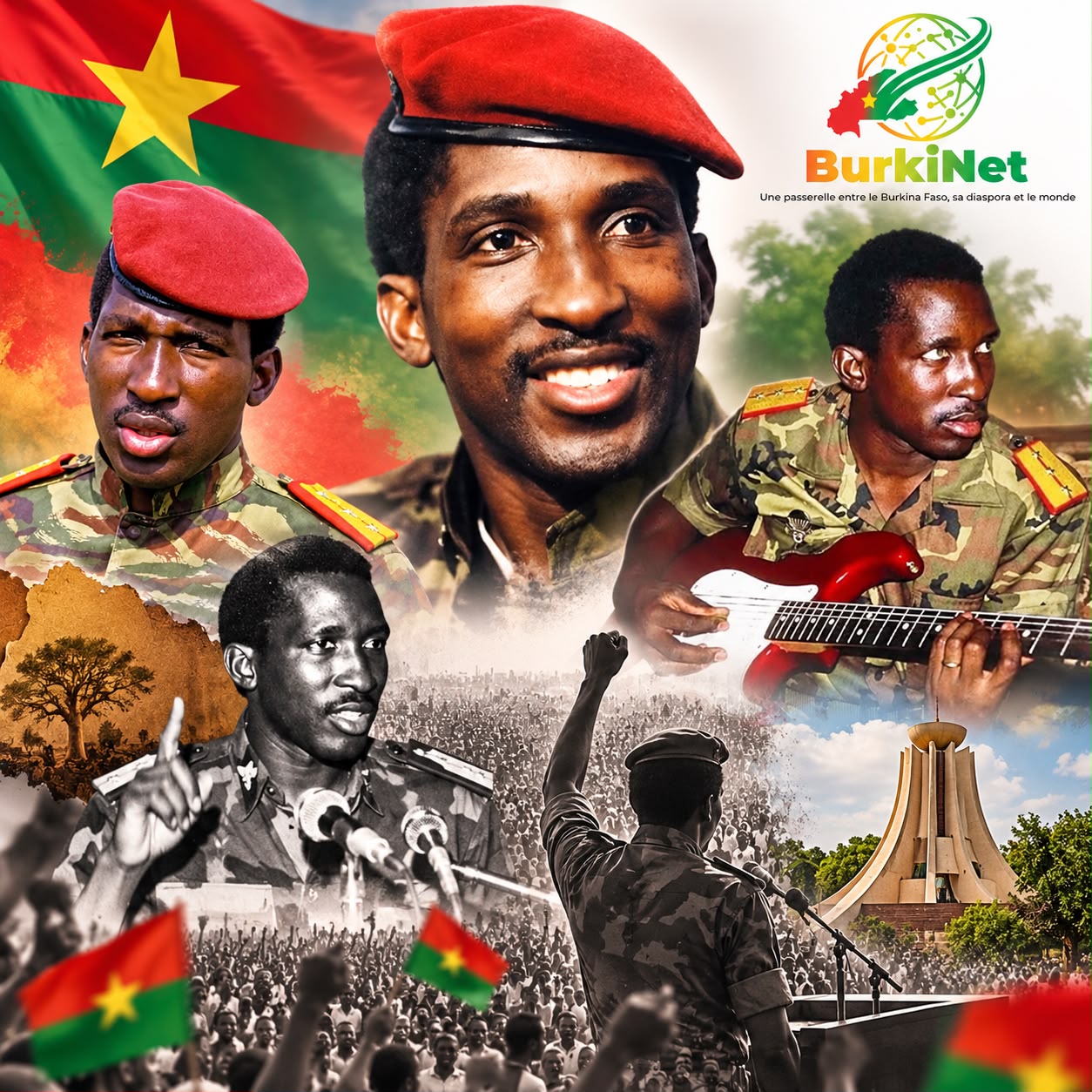
Ouagadougou, October 15, 2026 – This Thursday, October 15, 2026, marks the 39th anniversary of the assassination of Captain Thomas Sankara, former president of Burkina Faso and an iconic figure of the Burkinabè revolution. Nearly four decades after his death, his ideals of sovereignty, integrity, social justice, and endogenous development continue to inspire generations in Burkina Faso and beyond Africa’s borders.
On October 15, 1987, Thomas Sankara was assassinated in Ouagadougou, along with twelve of his companions, during a coup d’état that brought an end to four years of revolution. Having come to power on August 4, 1983, he had embarked on a profound transformation of Burkinabè society, driven by an ambitious vision: to build an independent, dignified nation capable of taking control of its own destiny.
A Commitment to Self-Sufficiency and National Development
During his presidency, Thomas Sankara made food self-sufficiency a top priority. He encouraged local production and consumption, convinced that political independence must necessarily be accompanied by genuine economic autonomy.
His efforts were also evident in several areas:
· Education: promoting literacy and developing school infrastructure.
· Women’s rights: denouncing forced marriages and female genital mutilation, and promoting women’s participation in public life.
· The environment: reforestation campaigns and initiatives to combat desertification.
· Public health: organizing large-scale vaccination campaigns and promoting preventive care.
· Governance: fighting corruption, reducing government spending, and promoting exemplary leadership.
These various initiatives helped make Thomas Sankara a major figure in African political history.
A Pan-African Vision That Remains Relevant Today
Beyond the borders of Burkina Faso, Thomas Sankara advocated for a sovereign Africa, united in solidarity and in control of its own resources.
His speech on African debt, delivered in July 1987 in Addis Ababa, remains one of his most memorable addresses. In it, he called on African countries to engage in collective reflection on their economic dependence and international power dynamics.
Even today, his positions continue to fuel debates on African integration, economic sovereignty, and the development of the continent’s resources.
A legacy passed on to new generations and the diaspora
Thirty-nine years after his death, Thomas Sankara remains a role model for many young Africans, as well as for Burkinabé communities living abroad.
His commitment to patriotism, dignity, and collective responsibility underscores the importance of every citizen’s contribution to their country’s development, whether they live within the national borders or as part of the diaspora.
For young people, his life story also serves as an inspiration to engage as citizens, to work hard, to innovate, and to seek solutions tailored to African realities.
39 years later, a legacy that spans generations
The commemoration on October 15 is a time to remember and reflect on the history of Burkina Faso, as well as on the values that shaped the August 1983 revolution.
While his actions and legacy continue to be the subject of historical and political analysis, Thomas Sankara remains unquestionably one of the most well-known Burkinabè figures worldwide.
Thirty-nine years after his assassination, his name remains associated with a powerful vision: that of a Burkina Faso and an Africa capable of building their future with dignity, responsibility, and sovereignty.
By Kéré Jessica Marie Carène